Skool SEO: How Public Communities Rank on Google (Secret Trick)
Public communities on Skool come with a significant SEO advantage that most community owners overlook. While you sacrifice some privacy and intimacy, you gain the powerful benefit of having your content indexed by Google and other search engines, which can drive organic traffic to your community.
This trade-off between privacy and discoverability is one of the most important strategic decisions you’ll make when building your Skool community.
In my video, I break down exactly how public communities rank in search results and share a practical strategy for promoting your community through cross-linking.
The SEO Power of Public Communities
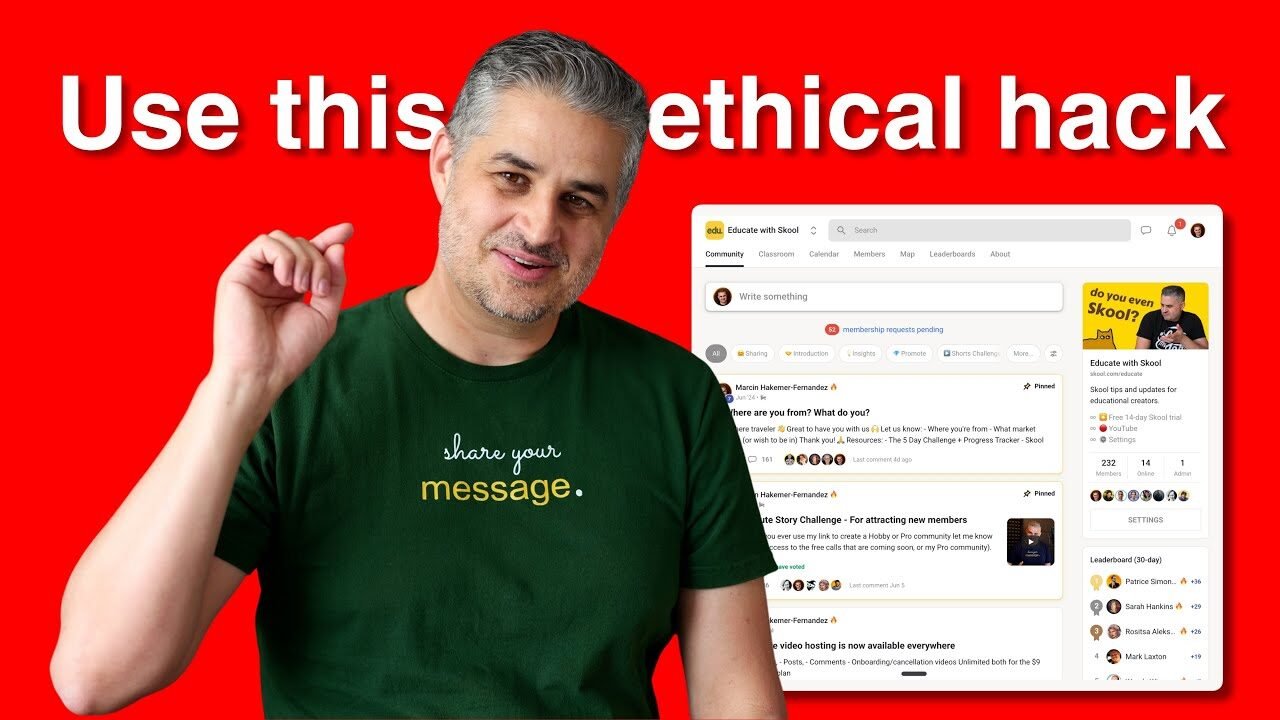
When I tested this myself, I searched for “Skool $9 plan” in Google to see what would appear. The results were telling: beyond the sponsored ads and a few videos, public Skool community posts were ranking prominently. Specifically, I found posts from the Educate with Skool community showing up in the results, which demonstrates just how effective public communities can be for search visibility.
The implications of this are significant for community builders. If someone is searching for a specific niche topic combined with the word Skool—let’s say “horse riding Skool“—there’s a high probability that a public article from a Skool community will appear in their search results. This organic discoverability is something that private communities simply cannot access.
The Privacy vs Discoverability Dilemma
I understand that many of you run private communities, and there are good reasons for that choice. Private communities offer greater intimacy, exclusivity, and protection for your members’ conversations. The challenge is that you’re essentially invisible to search engines when you go private.
In my video, I explain that ideally we would have a hybrid model where public communities could include private posts, or where private communities could have public categories. Unfortunately, this functionality isn’t currently available on Skool, which means you need to choose one approach or the other for your entire community.
My Cross-Promotion Solution
Since we can’t have a true hybrid model yet, I’ve developed what I call “the next best thing” for community owners who want to gain SEO benefits even if they run private communities. If you have decent writing skills and want to promote your community, you can leverage my public Educate with Skool community to create indexed content that links back to your own community.
Here’s how the system works: You can join my community and write posts in the designated promote category (you might see it labeled as SEO, promotion, or promoting depending on when you’re reading this). The quality bar isn’t extremely high, but the content does need to be reasonably well-written—I will delete posts that are poorly constructed or spammy.
How to Structure Your Promotional Posts
When you create your promotional post in my community, there’s a specific format that works best. First, craft a compelling title that captures attention and includes relevant keywords. Then, make your very first sentence a link directly to your community. This is crucial because you want anyone who finds your post through search engines to immediately know where to go to learn more.
After that opening link, write a valuable article that provides genuine insights or information. The better your content, the more likely it is to rank well and attract clicks. If you’re creating video content for YouTube, this strategy becomes even more powerful. You can structure your promotional posts as a series—for example, “Number 1: [Video Title]”—and continue promoting your community through multiple posts over time as long as you follow the guidelines.
The key rules are straightforward: don’t go overboard with promotional content, make sure you’re promoting your personal Skool community (not unrelated products or services), and of course, keep everything legal and within platform guidelines.
The SEO Benefits of Cross-Community Linking
Beyond just getting your content indexed by Google, there’s another significant SEO advantage to this cross-promotion strategy. When your community page receives backlinks from another established community, it can help boost your own page’s authority in search engine rankings. This is a fundamental principle of SEO—pages with quality inbound links tend to rank better than those without them.
Additionally, when members of my community engage with your promotional posts through comments and interactions, it creates social signals that search engines may consider when determining content quality and relevance. This means that engaging, valuable posts are more likely to perform well both within the community and in search results.
Learning More About SEO Strategy
Because SEO for communities is such an important topic, I’m planning to bring in a specialist to dive deeper into these strategies. If you’re watching this video soon after it’s published, keep an eye out for that interview. If you’re seeing this later, check the classroom section of my community where that video recording should already be available.
Understanding how search engines interact with Skool communities can give you a significant competitive advantage in growing your member base organically. Most community owners are focused solely on paid advertising or social media promotion, which means organic search traffic represents an underutilized growth channel.
Getting Started with This Strategy
If you’re interested in taking advantage of this promotional opportunity, you can find the link to join my community in the description of my video. I’ve specifically created a post with more details about this cross-promotion system, and you’ll find the video embedded there as well for easy reference.
For those of you who are just starting your Skool journey, I’ve also included my referral link in the video description, which gives you 14 days to try the platform for free. This trial period gives you plenty of time to test both public and private community settings and determine which approach aligns best with your growth strategy and member needs.
The decision between public and private isn’t always straightforward, and it depends heavily on your specific niche, audience expectations, and growth goals. However, understanding the SEO implications of your choice ensures you’re making an informed decision rather than leaving potential organic traffic on the table without realizing it.