
Community Growth Formula: Traffic × Conversion = 600 Members/Month
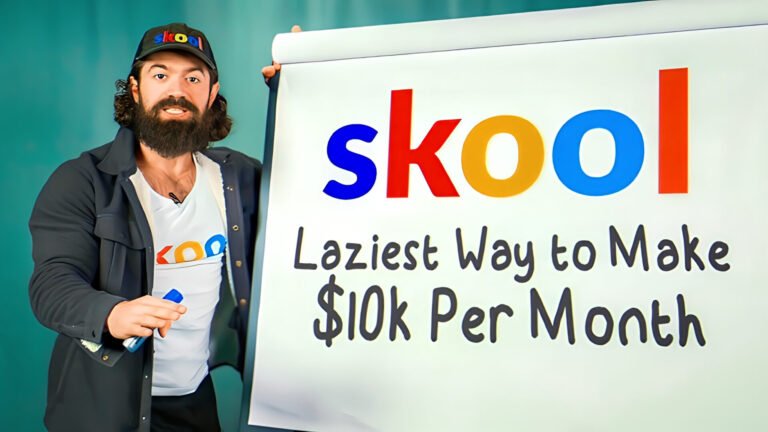
If you want to grow your online community, you need to understand a simple equation: traffic times conversion rate equals growth. In my video, I break down exactly how to drive traffic to your community and optimize your about page to convert visitors into members.
Whether you’re brand new or already have momentum, this guide will show you the proven strategies that top-performing communities use to scale.
Watch my full walkthrough below where I explain the complete growth framework step-by-step.
The Hormozi Effect and What It Means for Community Builders
In my video, I discuss what we’re calling the “Hormozi Skool Tsunami.” The platform recently experienced massive growth, now reaching 172,000 members across communities. This surge created incredible momentum, with charts in our company literally showing vertical growth lines. For anyone building a community right now, this represents a unique opportunity to tap into a platform that’s experiencing network effects at scale.
I want to give a special shout-out to the OG Skool members who have been welcoming new members and sharing their knowledge. The energy in the community right now is electric, with experienced builders helping newcomers get up to speed. If you’re new to the platform, I recommend watching last week’s episode and going through the Skool 101 course to get the full foundation.
Platform Updates: What’s Coming Next
In my video, I share an exciting roadmap update about two major features currently in progress. First, native live streaming is coming to Skool, which means you’ll be able to host live videos directly on the platform without needing Google Meet or Zoom. This feature will be included in both pricing plans, making it accessible to everyone.
Second, subscription tiers are being developed, allowing you to create premium models where your community could be free to join with paid tiers inside, or you could offer multiple paid tiers at different price points like $9.99 and $99. These features represent significant upgrades that will give community builders much more flexibility in how they structure and monetize their offerings.
The Simple Growth Equation Every Community Builder Needs
I explain in my video that growth comes down to a straightforward formula: traffic times conversion rate equals growth. If you want to grow your community, you can only change two variables: getting more people to visit your about page (traffic) and improving your about page to convert more visitors into members (conversion rate).
Here’s a practical example I share: if you get 100 visits to your about page with a 20% conversion rate, you’ll get 20 members. Do that consistently every day for a month, and you’ll add 600 members. It really is just math, and understanding this equation helps you focus your efforts on the right activities.
The Three Essential Steps to Growing Your Community
In my video, I break down three fundamental steps that might sound simple but are surprisingly often neglected. First, put your community link in your bio across all platforms—Instagram, YouTube, TikTok, LinkedIn, Facebook, wherever you have a presence. This takes about 30 seconds to do, but it can bring you members every single day from that point forward.
Second, post about your Skool community on social media. Don’t just drop links—actually talk about your community in your content. Show what’s happening inside, share wins from members, and give people a reason to click. Third, be consistent and don’t give up. I explain that this is where most people fail. Everyone starts out struggling with low views and low engagement, but those who push through eventually crack the code.
Where Traffic Actually Comes From: The Data-Backed Sources
In my video, I reveal that we analyzed where successful Skool communities get their members from, and the results fell into three main categories: social platforms, traditional methods, and network effects from the platform itself. The beauty of this is you don’t need to master all of them—just one can be enough to build a thriving community.
YouTube: The Number One Traffic Source
YouTube is the most common way people drive traffic to their Skool communities. In my video, I share the example of Nick Sarrive, who makes approximately $290,000 per month doing AI automation tutorials. His entire strategy is remarkably simple: he makes YouTube videos about his topic, puts his link in his bio and video descriptions, includes it in pinned comments, and mentions his community natively in his videos. That’s it. He’s built a nearly $300,000-per-month business using just YouTube and Skool.
The lesson I emphasize is that you don’t need to be on every platform. YouTube has billions of users, so mastering just this one platform can take you years and provide everything you need. The algorithm doesn’t penalize you for including links in descriptions like some other platforms do, making it particularly effective for community building.
Instagram: The Comment Strategy That Works
For Instagram, I explain a specific strategy that works exceptionally well: the “comment if you want it” approach. Instead of dropping a direct link in your post (which the algorithm tends to suppress), you ask people to comment with a keyword or phrase if they’re interested. This generates engagement, which the algorithm loves, giving your post more reach. Then you DM everyone who comments with your community link.
In my video, I mention tools like ManyChat that can automate this process, though you can also do it manually when you’re starting out. The key is that Instagram’s algorithm sees the comments as engagement and rewards your post with more visibility. You can also use Stories with links and, most importantly, native mentions where you actually talk about your community in your content rather than just dropping links.
Facebook: Similar Strategy, Different Audience
Facebook works much like Instagram with the comment strategy. I explain that anywhere you can DM people, this approach crushes. The pattern is consistent: link in bio, post with the “comment if you want it” strategy, and native mentions where you actually show and discuss your community in your content. I share the example of Doug Borton, an OG Skool member who effectively uses Facebook with a compelling headline: “Come join the number one free community.”
TikTok: The Power of Going Live
In my video, I reveal something interesting about TikTok: while the standard strategies work (link in bio, native mentions), there’s one tactic that absolutely crushes on this platform—going live. At one of our events, about a third of successful community builders said they won simply by going live every day on TikTok. There’s something about TikTok’s algorithm that really favors live streaming, making it an incredibly powerful tool for driving traffic to your community.
LinkedIn: Professional Networking at Scale
LinkedIn follows similar patterns to the other platforms: link in bio, posts with engagement tactics, and native mentions. I show an example in my video of someone teaching Microsoft software who naturally includes his Skool community link when discussing where people can learn to make reports. The professional nature of LinkedIn makes it particularly effective for B2B communities and professional development topics.
Traditional Methods That Still Work Incredibly Well
Beyond social platforms, I explain several traditional methods that drive consistent traffic. If you have an email list (using tools like Mailchimp), you can broadcast your community link, build it into welcome sequences, or include it in your email footer or PS section. I’ve seen some creators include their community link in every email as a subtle, non-aggressive call to action that steadily drives sign-ups.
For websites, you can mention your community prominently. I share the example of Samuel, an artist who runs Sam’s Art School. He has an “Art School” tab on his website that leads to his community, though I suggest he could get even better results by linking directly to his Skool page rather than requiring an extra click.
Podcasts offer another avenue, particularly through native mentions. I explain that many podcasters say things like “This episode is sponsored by my Patreon” and you can do something similar with your community. The key is learning to mention it naturally: “Want to hang out with other people who love hardcore history? Join us here.” Making it feel organic rather than forced dramatically increases effectiveness.
Paid Advertising: Driving Targeted Traffic
In my video, I discuss how paid ads can drive traffic directly to your about page. The most popular platform is Meta (Facebook and Instagram), but Google search and YouTube ads work well too. I share the example of Evelyn Weiss, who runs “Grow with Evelyn” and actually teaches people how to grow their communities with ads—creating a meta example of using ads to promote a community about using ads.
The paradigm shift many people need to make is understanding that you don’t need a custom funnel anymore. You can point paid traffic directly to your Skool about page, and it actually converts better than most custom funnels people build. The tracking is excellent, the analytics are clear, and the conversion rates often exceed what people achieve with complicated multi-step funnels.
Skool Network Effects: The Snowball That Builds Itself
One of the most powerful aspects I explain in my video is how Skool creates network effects once you gain momentum. The first major source is affiliates. Once you have about 100 members paying $100 per month, you can offer them 30-40% commission for referring friends. Many communities get 20-40% of their members from affiliates.
I share the incredible example of Sirius Circle, a French community that’s now making $360,000 per month. About 50% of their members come from affiliates, and they’ve created a brilliant system: they hold weekly calls showing what top affiliates are doing, so other members can learn and replicate those strategies. When one person has a breakthrough, everyone gets better. Plus, affiliates are highly incentivized to stay in the community because they lose their commissions if they cancel.
The second network effect is Skool Discovery. When you make a good community with engaged members, it ranks higher in the platform’s discovery section. Right now, Discovery drives 27% of all memberships across the platform, with some communities getting more than 50% of their members this way. I share the example of Hazel’s crochet community, which got all 247 members purely through Discovery without posting a single link anywhere.
Conversion Rates: What the Data Actually Shows
In my video, I reveal platform-wide data that shows the average conversion rate for free communities is 20%, while paid communities average 4%. These are actually excellent conversion rates compared to typical landing pages, which is why you can use your about page as your primary sales tool without needing a complex funnel.
The key insight I share is that conversion rates can vary significantly based on price, traffic quality, and about page quality. I reference the Sirius Circle example again, where their conversion rate jumped from 0.5% to 2.2%—more than quadrupling—just by adding one video to their about page. Sometimes one change can dramatically shift your results.
What Makes a High-Converting About Page
The strategy I explain in my video is surprisingly simple: show people what it’s like on the inside. Many people overcomplicate this with fancy copywriting techniques, but what works best is just opening up your screen recorder and clicking around your community, saying “Look, here’s where people post. Here’s the map feature where you can find members near you. Here’s the classroom with courses.”
The framework I recommend is feature plus benefit. Don’t just say “there’s a map”—say “there’s a map so you can meet up with people just like you.” Don’t just say “weekly calls”—say “weekly calls so you can hang out with others and achieve this outcome.” Be direct and clear, use simple language, and state both what people get and why it matters to them.
Common patterns I point out include using emojis as bullet points, adding testimonials or screenshots of wins from inside the community, and calling out specifically who you’re targeting. Examples like “Hi moms, I’ve got you” or “Hello there dedicated actor 18+ from North America or Europe” immediately make the right people feel like the community is designed specifically for them.
Starting From Zero: Building an Audience
In my video, I address the question many people have: what if you don’t have an audience? My answer is straightforward—you should start building one. If you want to make money on the internet, it’s very hard to do without creating content because content is what the internet is. You need something out there for people to discover you.
I explain that attention is on platforms like YouTube, Instagram, and TikTok. If that’s where people spend their time, you need to get in front of that attention to build a business. The key decisions are choosing the right platform (pick the one you consume most because you already understand it), selecting a format that feels right (tutorials, vlogs, podcasts, screen shares), and establishing a schedule you can maintain (daily or weekly work best for beginners).
The most important principle I emphasize is this: create the content you want to consume. If you wish certain content existed, make it—because if you want it, others probably do too. I share that with my content, I chose this format of sitting next to someone looking at a computer because that’s literally what I do all day anyway. Making it aligned with your natural behavior dramatically increases your chances of staying consistent.
The Reality Check Everyone Needs to Hear
In my video, I share what I believe is the most important truth about content creation: everybody sucks on day one. Even Mr. Beast, who has the most views on YouTube, got almost no views for the first five years. You can do better than his early numbers. The secret is that everyone starts terrible, which is actually why most people don’t even start—they think successful people were good from the beginning.
I share my own experience: in my whole first year of entrepreneurship, I made no money and didn’t even have the bright idea to start building an audience. Even Alex Hormozi didn’t start making content until 2020, relatively recently compared to his overall business career. The pattern is always the same: you suck at the beginning, you don’t give up, you get better and better, and then suddenly you have a breakthrough and it explodes. You might go from zero to $100,000 per year to $300,000 per year very quickly once that tipping point hits.
Another barrier I address is the fear of judgment from friends and family. I know so many people who want to start creating but don’t because of what people they know will think. You have to break through that limiting belief, or you’ll be stuck forever. The alternative is staying where you are, which isn’t really an alternative at all.
Resources Mentioned
In my video, I reference several helpful resources for new members. The Skool 101 course is available in the classroom section and provides a complete foundation for building a successful community. I also recommend watching previous episodes, particularly episode 23, which provides a full overview for newcomers.
For those interested in automating the comment-to-DM strategy on Instagram and Facebook, ManyChat is a popular tool many community builders use. The platform itself is accessible starting at just $9 per month, making it an affordable option for anyone looking to build and monetize a community online.