Free vs Paid Skool Communities: The Framework That Converts (2024)
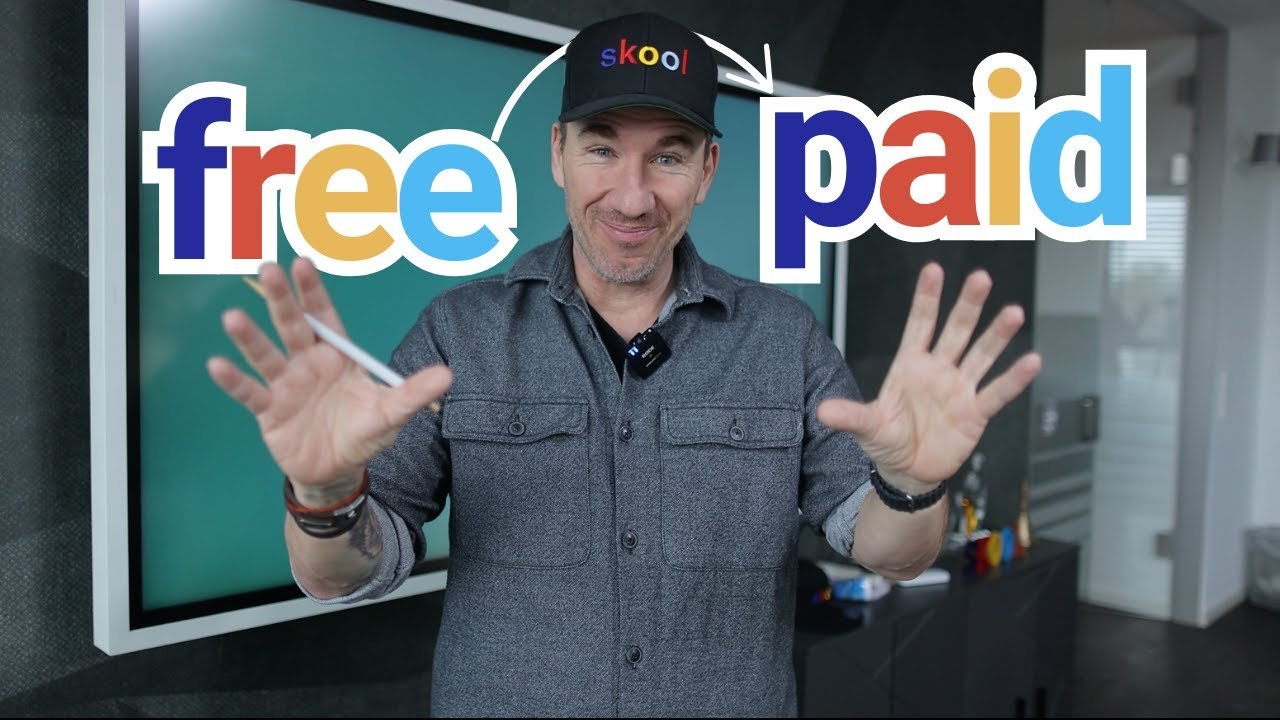
If you’re building communities on Skool, you’ve probably wondered what the actual difference should be between your free and paid communities. In my video, I break down a proven framework I’ve developed after creating more than 30 communities over the past year that solves the biggest problem community builders face: getting free members to upgrade to paid.
Most community leaders struggle because they put too much value in their free community, making it nearly impossible to justify the paid tier.
I explain my complete approach to structuring both communities so they complement each other rather than compete.
The Common Approach (And Why It Creates Problems)
Many community builders follow what I call the Alex Hormozi style or the international approach: they pack their free community with as much value as possible, including courses, scripts, and resources. The strategy is to build massive trust, then book strategy calls to convert members into the paid community. While I understand this works for some people, I’ve discovered a critical flaw through my experience running communities on Skool.
When people receive extensive content in the free community and I ask them to join the paid version, they consistently give me the same response: “I’m still busy with the content in the free community.” They tell me they don’t want to join yet, maybe later. But here’s what actually happens—they never finish watching all the videos in the free community. Eventually, they question why they should pay for something when they haven’t even consumed what’s already free.
This creates a psychological barrier that’s nearly impossible to overcome. The abundance of free content becomes the exact reason they won’t upgrade, not the reason they will.
My Recommended Framework: Free vs Paid
After creating more than 30 communities and playing this game for over a year, I’ve developed a different approach that consistently works better. The key is understanding that your free and paid communities should serve fundamentally different purposes.
What Your Free Community Should Be
Your free community should function as a lead magnet destination with minimal ongoing content. I recommend including a single high-value resource—what I call an “elite magnet”—which could be a video, audio book, script, templates, or similar asset. This is what brings people from social media to your Skool community in the first place.
Beyond that initial resource, keep it simple: maybe one call per month and space for members to interact. The goal of the free community is not to create a massive transformation or teach everything you know. Instead, it’s to help people learn what Skool is and experience the platform.
Many people on social media don’t understand why they should join another platform or what makes Skool different from other social media. Your free community gives them a chance to see how great the platform is and what’s possible in a community environment.
Think of your free community like an offline meetup. When people attend a meetup for athletes or sport enthusiasts, they don’t watch courses together or train as a group. They simply hang around and talk. It’s about bringing together a certain kind of people around a broad topic, giving them a space to connect and exchange ideas.
What Your Paid Community Should Deliver
Your paid community is entirely different. This is where transformation happens. While the free community might be about a broad topic like health or sports, the paid community focuses on becoming something specific—like mastering fasting or becoming an athlete.
In the paid community, you include everything needed for real progress: training videos, expert calls, workshops, co-working sessions, and meetups. This is like a club rather than a casual meetup. Members aren’t just talking about the topic; they’re actively working together to get better and achieve specific outcomes.
The paid community has a clear purpose: helping members become something they aren’t yet. It’s about guided transformation with structure, accountability, and comprehensive support.
Why This Model Works Better
I’ve run this model for more than a year across multiple communities, and it consistently outperforms the “pack everything into free” approach. When you put too much value in the free community, it becomes incredibly difficult to justify the paid tier. Members feel like they already have everything they need, or worse, they feel guilty for not consuming what’s already free.
With my framework, the transition is natural. Members experience Skool in your free community, they connect with like-minded people, and when they’re ready to achieve a specific transformation, the paid community is the obvious next step.
You still need onboarding calls in most cases, but the conversation is different. You’re not trying to convince someone to pay for something similar to what they already have for free. Instead, you’re showing them a clear path to a specific outcome they can’t achieve in the free space.
The Tesla Analogy
I often say that if people can buy a Tesla on the website with seven clicks, you shouldn’t need an elaborate onboarding process to bring people into a paid community for $99. When you have a free community packed with tons of value and then require extensive sales calls to convert members, something is fundamentally wrong with your positioning.
The difference between your free and paid offerings should be so clear and compelling that the decision becomes straightforward. The free community answers the question “What is this platform and who are these people?” The paid community answers “How do I become what I want to become?”
Getting Started With This Approach
If you’re building your first community or restructuring existing ones, start by defining the broad topic for your free community. What kind of people do you want to bring together? What single valuable resource can you offer that will attract them from social media to Skool?
Then define the specific transformation your paid community delivers. What will members become? What specific outcome will they achieve? Build your paid community structure around delivering that transformation with all the resources, calls, and support needed.
I cover community leadership, scaling, marketing, and building a complete Skool business system in my own community. You can find the link in the description where you’ll also get a free course about how to build a community in 7 days.
This framework has worked across more than 30 communities I’ve created, and it solves the conversion problem that most community builders struggle with. The key is keeping your free community simple while making your paid community the obvious choice for anyone ready for real transformation.