The Two-Group Model: Turn Free Communities Into Paid Revenue
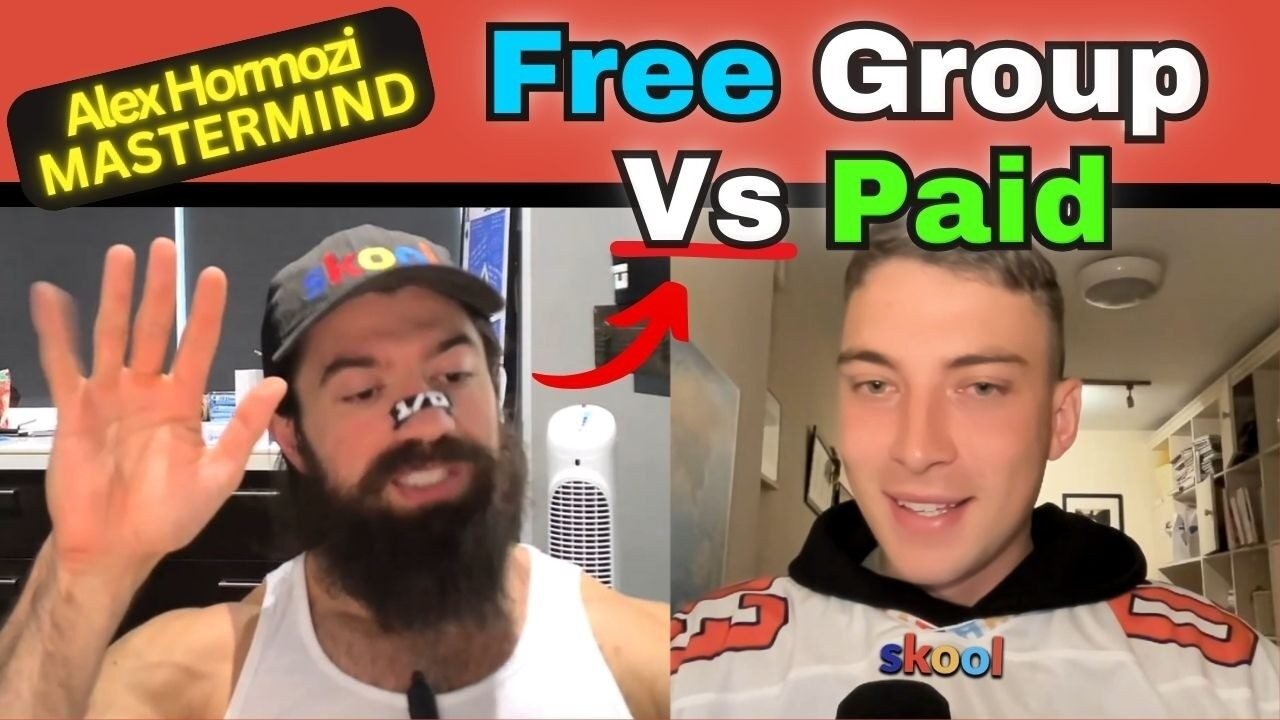
In my video, I break down the exact strategy for structuring free and paid communities to maximize conversions and revenue. This isn’t theory—it’s based on patterns I’ve seen work repeatedly across successful Skool community owners who are consistently making money.
I explain the specific framework that high-performers use to convert cold traffic into paying members through a strategic two-group model.
Watch as I answer real questions from entrepreneurs inside the Skool Games and reveal the exact mechanics of profitable community building.
The Two-Group Model That Actually Works
In my video, I address one of the most common questions I get: should you have a free community, a paid community, or both? The answer is clear based on what I’ve observed across the platform. The people who have the most success use two groups—one as a lead magnet and one as the main offer. This isn’t just my opinion; it’s a recurring pattern I see over and over again with entrepreneurs who are actually generating revenue.
The purpose of your free community is singular and focused: convert cold traffic into your paid group. That’s it. Think of your free Skool community the same way you’d think about any lead magnet. It exists to attract people, give them a low-friction way to enter your world, and then systematically move them toward your paid offer. When you understand this fundamental purpose, everything else becomes clearer.
The Five-Video Framework for Free Communities
I explain in detail what should actually go inside your free community. The cornerstone is a five-video sequence that’s really just one sales presentation broken into digestible pieces. This could be a webinar or a video sales letter (VSL) that you’ve strategically divided to maximize engagement and completion rates.
Here’s how the five videos break down. Video one is your introduction, where you tell your origin story, explain the nature of the problem you solve, or illustrate the size of the opportunity available. This sets the stage and gets people emotionally invested in what you’re teaching.
Videos two through four are your three core stories designed to overcome objections. The first story addresses their doubts about themselves—their own ability to achieve the promise you’re making. The second tackles their doubts about other people and whether this works for people like them. The third confronts their doubts about external circumstances, the universe, or conditions outside their control. Each of these stories should feature people similar to your audience who achieved the result you’re promising.
The fifth video is your call-to-action. This is where you say, “Let me tell you about the offer I have that I think would really work well for you.” It’s direct, clear, and positions your paid community or program as the logical next step.
What Else Should Go in Your Free Community
Beyond the five-video sequence, I recommend keeping things simple. Hold one call per week where you provide value and soft-pitch your paid community. This gives people a chance to experience your teaching style live and creates a regular touchpoint where you can drive conversions.
In my video, I emphasize that you should answer questions in the free community and encourage engagement through posts and interactions. The goal is to create enough activity that people feel like they’re part of something, but you’re not trying to deliver your entire paid program for free. Everything in the free community should increase the likelihood that someone converts to your paid offer.
The Math Behind Running Ads to Free Communities
Someone asked me about ad strategy for free communities, and I break down the fundamental math. You install your conversion pixel on your Skool group and start running ads. Then you track everything: cost per member, conversion rate to calls, close rate on calls, and customer lifetime value.
Here’s the example I give in my video: You spend $100 and get 25 free members. Of those 25, you get on a call with six of them. Of those six calls, you close two at $199 per month. That’s $400 in immediate revenue from a $100 ad spend, plus you still have the recurring revenue on the backend. If you can make that math work, you have a scalable business.
The key insight is that you need to track every step of this funnel. How much does it cost to acquire a free member? What percentage book a call? What percentage of calls convert? Once you have these numbers, you can optimize each step and scale what’s working.
Adding Calendar Links to Increase Conversions
In my video, I share a strategy for those of you who need to increase conversion percentages: add a calendar link and include a call as part of joining the free group. This dramatically shortens your sales cycle because you’re getting people on the phone while they’re most interested—right when they join.
Some people push back on this saying they can’t handle that many calls. I’m direct about this in the video: what problem do you want, busy or broke? I promise you won’t make less money by learning to sell more. If you’re genuinely getting too many calls, that’s a high-quality problem that means you need to hire or raise your prices, not that you should avoid calls altogether.
What About Switching Free Communities to Low-Ticket Paid?
One question I address is whether someone with a thousand-member free community should switch it to a $7 paid community for social proof. My answer is no. If you already have a thousand people in a free community, use the two-group model instead. Keep the free group as your lead magnet and create a clear paid offer that people ascend into.
The two-group model works because it gives you a clear conversion path. Your free group exists to attract and nurture. Your paid group is where you deliver your full value and build a sustainable business. Trying to charge $7 just for social proof misses the point—you want people making a real commitment, not just throwing spare change at you.
Balancing Value Without Creating Overwhelm
Another question I tackle is how to provide tons of value without overwhelming community members. My answer is simple: stick to the five-video framework and one weekly call. That’s it. You don’t need to create hundreds of modules or an elaborate curriculum for your free community.
The mistake most people make is thinking more content equals more value. In reality, clarity and focus convert better than volume. Your free community members need just enough to understand the transformation you offer and feel confident that you can deliver it. Everything else should happen in your paid community.
The Real Purpose of Your Free Community
I want to emphasize this point because it’s crucial: your free community is not a charity project. It’s a strategic business asset designed to convert cold traffic into paying customers. Every piece of content, every call, every interaction should support that goal.
When someone joins your free Skool community from an ad or a piece of content, they’re giving you their attention. Your job is to demonstrate enough value that they want more, then make it crystal clear how they can get it. That’s the entire strategy.
Why This Model Gets Mass Adoption
In my video, I mention that this approach is going to see mass adoption, and I’m seeing it happen in real-time. The reason is simple: it works, and it’s relatively straightforward to implement. You don’t need complex funnels or expensive software. You need a free Skool community with five videos and a paid community with your full program.
The platform itself makes this model easier than ever before. You can track engagement, see who’s watching what, and identify your most interested prospects. Then you get them on calls and close them into your paid offer. The simplicity is what makes it scalable.
I share inside the video that 54.1% of people who start paid communities on Skool make money. That’s an extraordinary statistic that speaks to how effective this model is when properly implemented. The framework I’m teaching you isn’t theoretical—it’s based on what’s actually working for real entrepreneurs right now.