How to Create Your First Skool Post (Step-by-Step Guide)
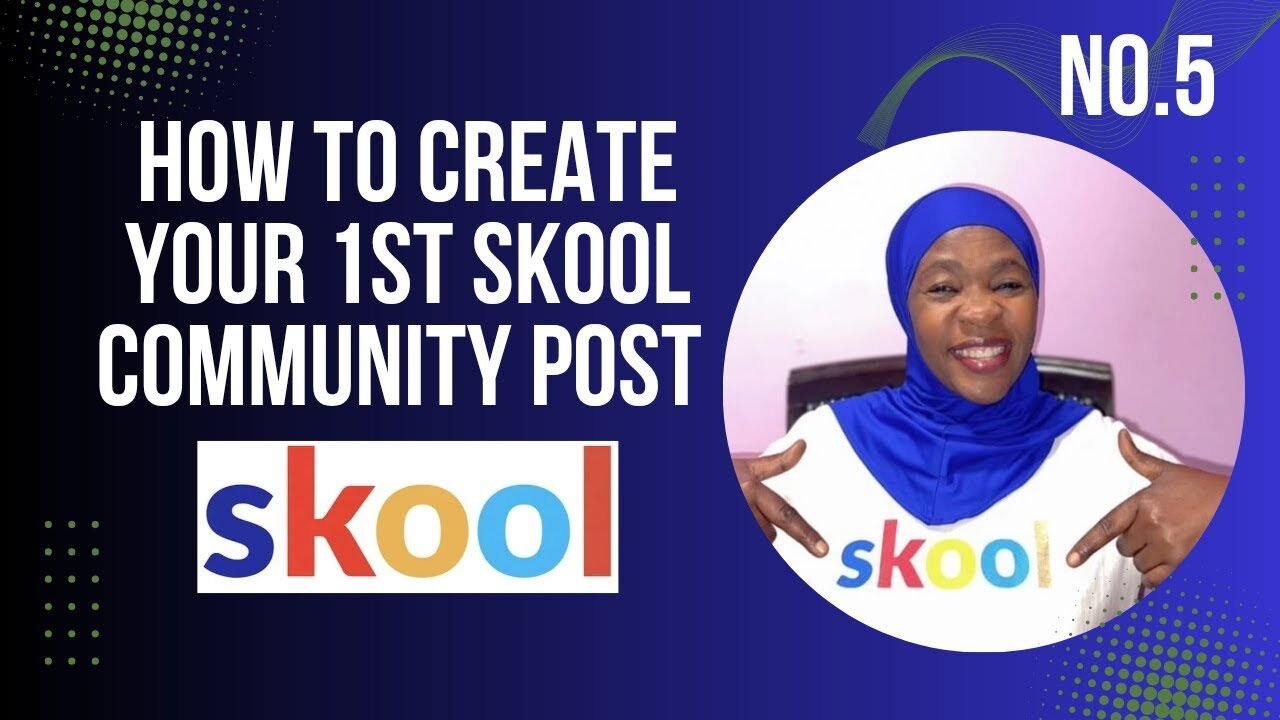
In my video, I walk you through the exact process of creating your very first post inside a Skool community, starting with a welcome post that invites new members to introduce themselves. This tutorial is essential because your first post sets the tone for community engagement and creates the foundation for member interaction.
I show you how to navigate the platform, use ChatGPT to craft compelling post content, and add engaging elements like GIFs and polls.
In my tutorial, I demonstrate everything in real-time, including the mistakes and how to fix them, so you see exactly what community building looks like in practice.
Finding Your Community Dashboard on Skool
I explain that one of the most confusing aspects for new Skool users is navigating to the right community, especially when you belong to multiple groups. The key is to always start with your profile photo, not by searching for your community name. On mobile, you’ll find your photo in the bottom right corner, and tapping the three dots reveals your options. On desktop, you simply click your profile photo to access your profile page.
From your profile, you can see all your communities listed together. The communities you own will always appear at the top with “owned by [your name]” clearly displayed, while communities you’ve joined as a member appear below. This organization makes it much easier to locate the specific community where you want to create content. I demonstrate this by navigating to my newly created community called “Share Your Story” to create the welcome post.
Using ChatGPT to Craft Your Welcome Post
In my video, I strongly recommend using ChatGPT to help create your first post, especially if you find writing challenging. I visit chatgpt.com and emphasize the importance of creating an account with your name and password so the AI remembers your previous conversations and context. This makes future interactions much more efficient since ChatGPT can recall details about your community and your preferences.
I show how ChatGPT remembers me by greeting me as “Sherifa” and recalling our previous work together. Instead of sharing the entire about page from my Skool community, I copy just the community description from the top of my community page. This shorter summary gives ChatGPT exactly what it needs without overwhelming it with too much information. The AI then generates a welcome post that includes the community purpose, guidelines, and a call to action for members to introduce themselves.
During my demonstration, I encounter a technical issue with ChatGPT when trying to make edits, and I show you how I handle it in real-time. I wanted to ask ChatGPT to add instructions for members to share their passion and optionally include an image or one-minute video introduction, but when the AI encountered an error, I simply copied what was already generated and decided to make the edits manually. This is an important lesson because technology doesn’t always work perfectly, and knowing how to adapt is crucial.
Creating Your Welcome Post Step-by-Step
I navigate to the community section and click “write something” to begin creating the post. Posts on Skool require both a title and a category. For my title, I write “New Member Please Introduce Yourself” and select the corresponding category I had previously created. I then paste the ChatGPT-generated content and begin editing it to make it more readable and personalized.
I break up long sentences into shorter paragraphs to improve readability and add my personal touch by introducing myself: “I’m Sherifa from Virginia, USA and I’m so glad you’re here.” In my editing process, I add specific instructions asking members to share their name, country, passion, and optionally a photo or short one-minute video introduction. I include community guidelines like “English only” and “Be kind and respectful” to set clear expectations from the start.
One of the mistakes I make during the recording is accidentally creating duplicate text, which I show you how to identify and remove. I leave this mistake in the video intentionally because it represents real-life community building where things don’t always go perfectly the first time. Learning to catch and correct these errors is part of the process.
Adding Visual Elements and Engagement Features
I demonstrate how to make posts more engaging by adding visual elements. Skool allows you to attach photos, videos, polls, GIFs, and tag members directly within your posts. For the welcome post, I search for a welcome GIF by typing “welcome” in the GIF search feature. I scroll through several options, looking for one that shows diverse people to make the post feel inclusive and welcoming.
After posting, I explain an important feature: the ability to send posts directly to members’ emails. Skool allows you to do this every 72 hours (three days), but I recommend saving this feature for truly important announcements. Regular posts generate notifications, but the email feature creates a special email that members are more likely to see and open. Overusing it could annoy members, so strategic use is key.
Once the post is live, I immediately like my own post and add the first comment. I explain that this not only gives you points on the platform but also models the behavior you want from members. My first comment reads: “Please follow what is requested above as you introduce yourself. Thank you. Welcome again.” I then add another welcome GIF in the comment and pin the comment so it stays at the top of the thread as members add their introductions.
Pinning Posts for Maximum Visibility
In my video, I show how to pin posts so they remain at the top of your community feed. Skool allows you to pin up to three posts at once, which is perfect for keeping important information visible. I demonstrate this by showing my established community where I have pinned welcome posts and important announcements that stay accessible to all members regardless of how many new posts are created.
Some community owners worry that pinned posts might be annoying, but I believe they’re essential for new member onboarding. I keep my new member introduction post pinned permanently while rotating other pinned posts based on current priorities. This ensures that anyone joining the community immediately sees how to introduce themselves and understands the community guidelines.
Creating a Poll Post for Engagement
To show you a different type of post, I create a simple poll asking “What are you grateful for today?” I select “Motivation” as the category and then click the poll option to add multiple choice answers. My poll options include “My health,” “My family,” “This community,” “All three above,” and “Nothing.” This variety gives members genuine choices while keeping the poll light and engaging.
I emphasize the importance of repeating your question in the post body, not just in the title. Many members won’t see the title when they’re scrolling through their feed or responding, so including the question again ensures clarity. After posting the poll, I’m the first to respond by selecting “All three above” and adding a comment: “I’m grateful for all three and more. Feeling good today.” I then add a celebratory GIF to make the response more fun and engaging.
This approach models active participation for your members. When they see the community owner engaging authentically with their own posts, they feel more comfortable doing the same. It creates a culture of interaction rather than a community where the owner only posts and never participates in discussions.
Setting Posting Permissions for New Members
I explain an important strategy for maintaining community quality: limiting posting abilities for brand new members. On Skool, every member has a level that corresponds to their activity and engagement. New members start at level one, and they need only five points to reach level two. Points are earned by liking posts, adding comments, and generally being active in the community.
In your community settings, you can restrict level one members from creating posts until they’ve engaged with existing content. This prevents spam and ensures that members who do post are actually invested in the community. I recommend this setting because it encourages new members to read, interact, and understand the community culture before contributing their own content. Members who immediately post without engaging often don’t respect community guidelines and can disrupt the positive atmosphere you’re trying to build.
Free vs. Paid Community Considerations
Toward the end of my video, I address an important strategic decision: whether to start your Skool community as free or paid. I explain that my “Share Your Story” community is paid, which makes it more challenging to attract initial members. When you have a paid community from the start, people are naturally more hesitant to join because they want to see proof of value before investing money.
I recommend that most people start with a free community to build momentum and gather initial members. You can invite people you know, and they’ll be more willing to join and actively participate when there’s no financial barrier. Once you’ve established activity, proven value, and created a vibrant community culture, you can then transition to a paid model. This approach builds trust and demonstrates that the community offers real value worth paying for, rather than asking people to take a chance on an empty paid community.