How We Made $94,080 in 2 Months With a Skool Community
If you’re looking to build a thriving online community and generate consistent monthly revenue, I’m going to show you exactly how we launched a Skool community that made $94,080 in just two months and scaled to over $300,000 in our first year. This isn’t theory or projections—these are real results from a real launch, and I’m breaking down every step so you can replicate this process yourself.
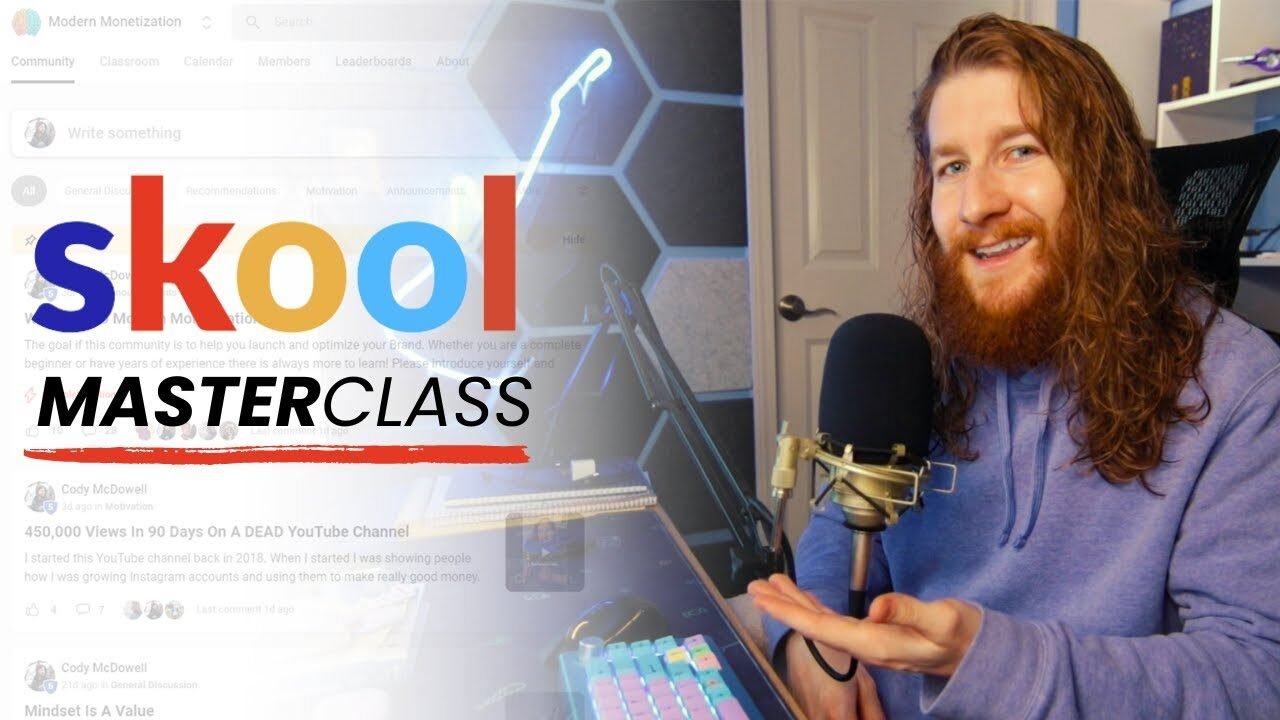
In my comprehensive masterclass, I walk you through the exact strategy we used to build and monetize a community on Skool, including the critical mistakes we made along the way and how you can avoid them.
I’ve been on the Skool platform since early 2022, long before the major influencers jumped on board, and I’m sharing everything I’ve learned about building, launching, and scaling communities that generate real monthly recurring revenue.
Why Skool Is Different From Every Other Platform
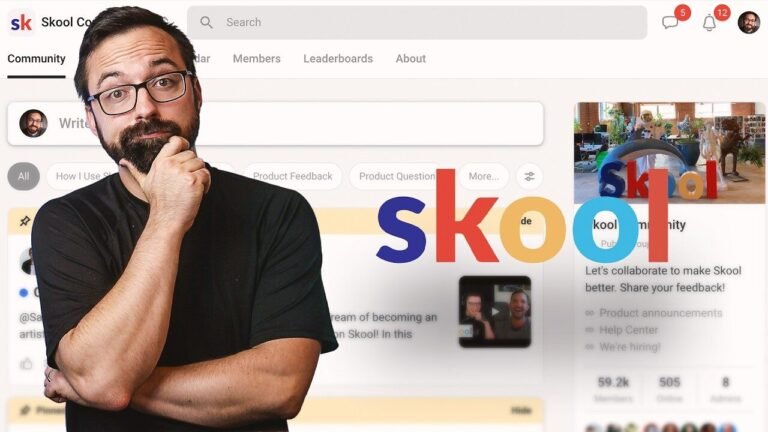
In my video, I explain why Skool beats platforms like Kajabi, Kartra, Builderall, Facebook groups, and even ClickFunnels when it comes to hosting communities. The fundamental difference is that these other platforms weren’t designed specifically for community-based businesses—they’re course platforms or funnel builders that try to accommodate groups as an afterthought. Skool was built from the ground up for community engagement and monthly recurring revenue.
One of the biggest advantages is ease of use for both you and your members. I’ve used all the major platforms, and none of them come close to how intuitive Skool is. You can become an expert on the platform in about an hour, which is crucial when you’re trying to help members navigate your content. The cleaner the experience, the better the results your members get, and the longer they stay subscribed.
The Alex Hormozi Endorsement Changed Everything
Alex Hormozi recently announced that he made the largest investment of his life into Skool, calling it the platform that makes starting an online business simple, easy, and fun. For those who don’t know, Alex built consulting.com to $30 million per year before selling it to focus exclusively on acquisition.com. When someone with that level of business acumen goes all-in on a platform, it’s worth paying attention.
Since his endorsement, I explain in my video how the platform has experienced explosive growth—user payouts are growing at 62% per month. That’s not a typo. The momentum behind Skool right now is unlike anything I’ve seen in the online business space, and those who get in early are positioning themselves for massive opportunities.
Unique Features That Drive Revenue
What sets Skool apart are features that no other platform offers. First is discoverability through an internal search engine—people can find your community directly within the platform, which means you’re not solely dependent on external traffic. This is huge because on Kajabi or ClickFunnels, nobody can discover your courses unless you drive them there.
Second is SEO capability for public groups. If you label your group as public, your posts and content can be indexed by Google and other search engines. This means you can get organic traffic from people searching for solutions to their problems, without spending a dime on advertising. Facebook doesn’t offer this. No other course platform offers this. It’s a game-changer for growth.
Third is the gamification system. Members earn points by engaging with content, liking posts, and commenting. As they level up, you can grant access to additional classrooms and content. This creates a natural progression that keeps people active and engaged, which directly translates to lower churn rates and higher lifetime customer value.
How We Launched and Made $94,080 in Two Months
In my masterclass, I break down our exact launch strategy. We partnered with Andy Heald, a YouTube growth expert with an established audience. Our first step was researching the best possible offer for his audience, which at the time was focused on YouTube growth. We didn’t guess—we asked questions, looked at pain points, and designed a solution that addressed their biggest struggles.
The second critical element was our two-month pre-sale campaign. This is something I recommend to everyone launching a community: announce what you’re building and let people know it’s coming. We spent two months creating content that referenced the upcoming program, building anticipation and desire. During this period, we were also building out the actual Skool community, organizing classrooms, creating templates, and systematizing our processes.
When launch day came, we didn’t just open the floodgates. We created scarcity through limited spots and time-sensitive pricing. Because we were offering group coaching and one-on-one calls, we genuinely had capacity limits. This drove urgency. We vetted members through Zoom calls, which not only ensured we got serious action-takers but also built personal connections that increased commitment and reduced refunds.
Our pricing strategy included clear communication that prices would increase after certain milestones—either a certain number of members or a specific date. This simple tactic got people to act immediately rather than “thinking about it” and never returning. The results speak for themselves: $61,000 in the first month and $32,000 in the second, totaling $94,080 before we even had a payment processor through Skool (we used Digistore initially).
The Mistakes We Made So You Don’t Have To
I’m transparent in my video about what went wrong. Our first mistake was not setting clear accountability standards from day one. Some members would be late to calls or not show up at all, and we’d reschedule. This set a bad precedent. Now I recommend offering only one reschedule—if they’re late or no-show without a serious excuse, that’s on them. Your time is valuable, and letting people push boundaries creates chaos in your schedule.
Second, we should have had multiple weekly call times. We only offered one group call per week, which meant many members couldn’t attend due to timezone or schedule conflicts. If you want engagement and retention, offer at least two or three different call times throughout the week so everyone has an opportunity to show up live.
Third, we learned the importance of giving members quick wins. The students who saw small victories early on—like getting their first 10,000 views or gaining their first subscribers within the first few weeks—became our biggest success stories. Those who didn’t get early wins often struggled to maintain momentum. Design your onboarding to deliver tangible results as fast as possible.
Creating Your Course Content the Right Way
In my masterclass, I walk through a complete course creation framework. The key is to not overthink it. Start with three simple modules that bridge the gap from your member’s current problem to their desired outcome. Each module should focus on one major step, and within each module, you break things down into bite-sized lessons.
For example, if you’re teaching YouTube growth, your three modules might be: creating great video ideas, producing engaging content, and optimizing for algorithm and discovery. Under “creating great video ideas,” you’d have individual lessons on keyword research, analyzing competitors, understanding audience psychology, and validating concepts. Keep lessons short and actionable—most people don’t have time to sit through three-hour lectures.
I emphasize in my video that people value speed and clarity over polish. A straightforward, results-driven course that gets them wins quickly is worth far more than a beautifully produced course that takes months to complete. Focus on the transformation, not the production value.
Building Your Skool Community From Scratch
In the second half of my masterclass, I provide a complete screen-share walkthrough of building a Skool community from scratch. I show you how to set up your group settings, customize your about page, create your first classrooms, establish discussion categories, and configure your payment settings. The entire setup process takes less than an hour once you know what you’re doing.
I walk through setting up auto-DMs so new members immediately receive a welcome message with clear next steps. This simple automation dramatically improves onboarding and engagement. I also show how to configure membership questions, which are critical for understanding who’s joining your community and what they need help with. These questions also serve as a way to collect email addresses even for free communities.
One powerful feature I demonstrate is level-based content unlocking. You can set certain classrooms to only be accessible once members reach specific levels through engagement. This creates a natural progression and rewards active participation, which keeps your community vibrant and reduces lurkers who just consume without contributing.
The Skool Games Opportunity
I explain in my video how Skool Games is a competition launched by Alex Hormozi where the top 10 community builders based on monthly recurring revenue get to fly to Vegas and meet with Alex at an exclusive event. But here’s what most people miss: even if you don’t make the top 10, if you get just three paid members at any price point, you’ll receive recordings of the entire event.
This means you get access to a mastermind-level training showing exactly what the top earners are doing to grow their communities—for the price of getting three paying members. The value exchange here is insane. I show viewers how to analyze the leaderboards, click into the top-performing communities, and reverse-engineer what’s working for them right now.
Why You Need to Start Now
The window of opportunity for Skool is wide open right now, but it won’t last forever. Every major platform has an early adopter phase where those who get in early have a massive advantage. YouTube had it. Instagram had it. TikTok is still in it. Skool is younger than all its competitors and already outperforming them in user experience, growth rate, and creator payouts.
In my video, I compare this moment to being an early YouTuber in 2006 or an early Instagram influencer in 2011. The platform is credible, the infrastructure is solid, and the community is exploding. The difference is that with Skool, you’re not building an audience you don’t own—you’re building a business with monthly recurring revenue and an actual exit strategy.
Another advantage I highlight is that when you build a community around a topic rather than your personal brand, you create a sellable asset. Sponsors and buyers will pay premium prices to acquire established communities because they control access to an engaged audience. This isn’t possible with a personal brand where everything depends on you showing up.
Getting Traffic to Your Community
The number one question people ask is how to get members. In my experience, organic traffic through social media is the most sustainable approach when you’re starting out. I built our community to $300,000+ without spending a single dollar on ads. The key is providing consistent value on platforms where your ideal members already hang out—YouTube, TikTok, Instagram, or LinkedIn.
I walk through examples in my video, like the bodybuilder who has 1.9 million Instagram followers and simply posts valuable content with calls-to-action linking to his Skool community. He’s not doing anything complicated—just solving problems publicly and inviting people to go deeper inside his paid group. This same strategy works at any scale, whether you have 100 followers or 100,000.
The mistake I see beginners make is cold DMing people with vague pitches about “an exciting new opportunity.” This doesn’t work. What works is building relationships, providing value first, and making specific, clear offers to people who have already indicated they’re interested in what you teach.
Partnership Opportunities for Non-Experts
One of the most powerful points I make in my video is that you don’t need to be the expert. I partnered with Andy Heald because he had the YouTube expertise and audience, while I brought Skool expertise and systems. This partnership model is how you can build a profitable community even if you’re not the subject matter expert.
There are thousands of coaches, consultants, and influencers who have knowledge and audience but don’t have the time or technical skill to build and manage a community. If you become a Skool expert, you can approach these people with a value proposition: you’ll handle all the community building, management, and systems in exchange for a percentage of revenue or a flat fee.
The key to making this work is having a dialed-in pitch that clearly explains what you’ll do, how it benefits them, and what results you can help them achieve. I share more details on this inside my free community, Modern Monetization, where I break down outreach strategies and partnership frameworks.
Pricing Strategy and Conversion Rates
I dive deep into pricing psychology in my video. Most people think they need to price low to get more members, but this often backfires. At $97 per month with a 2.5% conversion rate, you need 4,120 people to see your offer to make $10,000 per month. But at $997 per month with a 0.6% conversion rate, you only need 1,600 people to hit the same revenue.
This is why higher-ticket communities are often easier to scale with paid traffic—you need fewer conversions to generate significant revenue. However, I recommend starting with organic traffic at a $50-100 price point to validate your offer and dial in your systems before scaling with ads. Once you know your offer converts and your community delivers results, then you can confidently invest in paid acquisition.
The sweet spot I’ve found is offering both a low-ticket entry point (around $50/month) and a high-ticket option (coaching, done-with-you services, etc.). This allows you to serve members at different commitment levels while maximizing revenue from those who want more support.
Tracking Metrics That Matter
In my masterclass, I explain the importance of tracking key performance indicators. Conversion rate tells you how effective your marketing is—if only 0.5% of people who see your offer join, you either need better messaging or a better offer. Lifetime customer value (LCV) tells you how long people stay subscribed on average, which determines how much you can afford to spend on acquisition.
If your average member stays for six months at $50/month, your LCV is $300. This means you can profitably spend up to $150-200 to acquire a customer and still maintain healthy margins. Understanding these metrics transforms your community from a guessing game into a predictable business with clear growth levers.
I also track engagement metrics inside Skool—how many members are active weekly, which content gets the most interaction, and which members are leveling up fastest. These indicators tell me what’s working and where I need to improve the member experience.
Systemizing for Scale
After your first cohort or group of members goes through your community, I recommend doing a thorough debrief. Ask for feedback, identify bottlenecks, and refine your processes before bringing in the next wave. This is how you go from a scrappy launch to a smooth, systemized operation that can handle 100, 500, or 1,000+ members.
In my video, I explain how we refined our onboarding, improved our course structure, and eliminated headaches based on what we learned from our first students. Each iteration made the experience better for members and easier for us to manage. Once your system is dialed in, that’s when you can start scaling with paid traffic or partnerships, knowing that new members will get consistent results.