How I Generated $14,700 MRR in 12 Hours (Traffic Secrets)
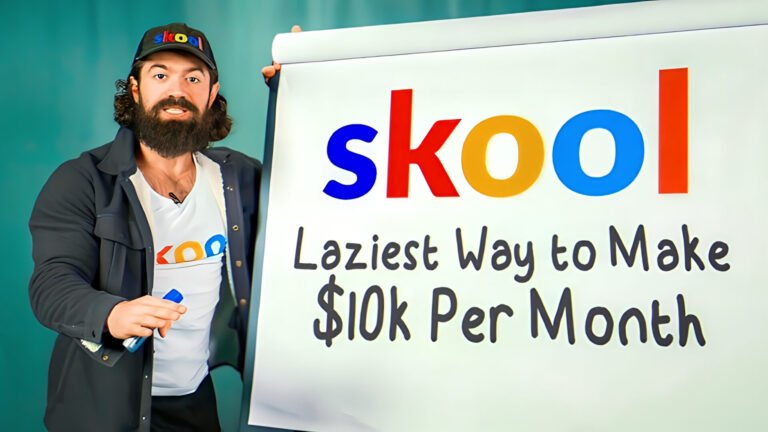
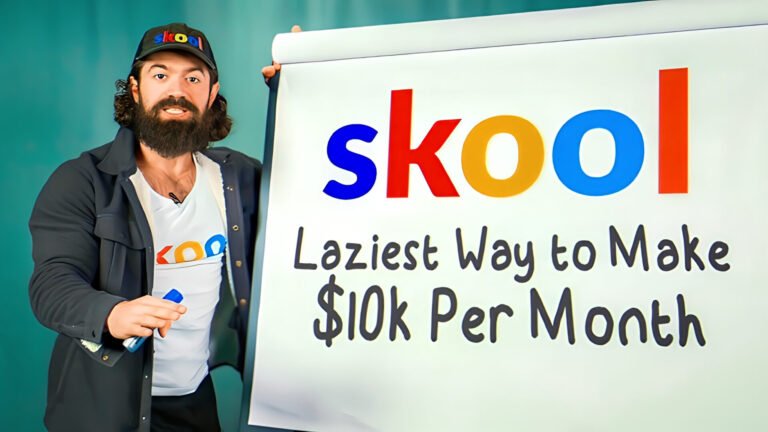
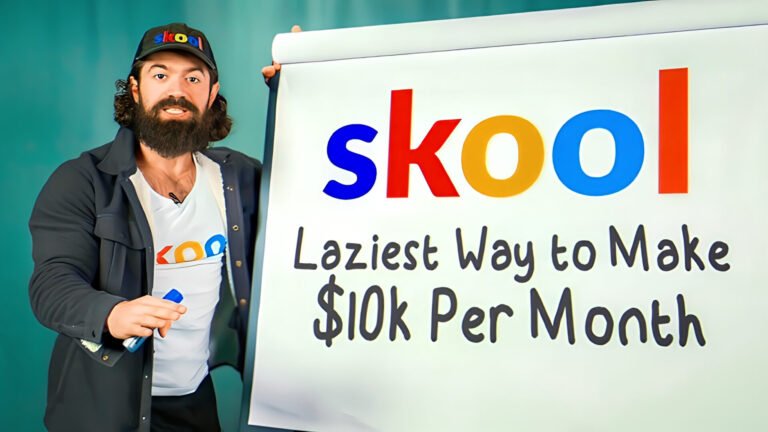
In my latest video, I break down the exact traffic strategies I used to generate $14,700 in new monthly recurring revenue in just 12 hours during the final days of the Skool games. These aren’t theoretical concepts—they’re battle-tested methods that have helped me build both my free and premium communities, including an Instagram reel that got half a million views on just my seventh attempt.
I’ll show you how to drive massive traffic to your Skool community using organic strategies like Instagram with ManyChat, YouTube content, Twitter threads, and paid advertising that converts.
In my video, I dive deep into everything you need to know about growing your community the right way.
The Foundation: Product-Market Fit Comes First
Before you pour gasoline on the fire, you need to have a flame worth fueling. In my experience working with hundreds of Skool community owners, I’ve seen the same mistake repeated over and over: people build entire courses and communities based on what they think people want, not what the market actually demands. The market wants what the market wants—this is the most fundamental lesson in business that took me years to fully understand.
At its core, business is simply a trade. You have something of value, someone else has money, and if they want what you have more than their money, a transaction happens. The problem is that most entrepreneurs, including those starting Skool communities, create based on their own assumptions rather than market validation. They build an entire 48-hour course thinking it’s amazing, only to discover that people simply aren’t interested in learning that particular thing.
I explain in my video how you cannot create desire in the marketplace—you can only leverage the desire that already exists. This is a core principle from Eugene Schwartz’s “Breakthrough Advertising,” which many top copywriters consider their bible. If someone wants a Shure microphone because they’ve seen Joe Rogan use one, it’s incredibly difficult to convince them to buy a different brand they’ve never heard of. The desire for the Shure mic already exists, and working with existing desire is exponentially easier than trying to create new desire from scratch.
Optimize Your About Page Before Driving Traffic
Once you’ve validated that people actually want what you’re offering, the next critical step is fixing your Skool about page. I created a separate video specifically on this topic because it’s absolutely crucial that you fix the conversion part of your community before you start driving any traffic to it. There’s no point spending money or time getting people to your community if your about page doesn’t convert them once they arrive.
Think of your about page as your landing page. It needs a compelling video that quickly explains what members will get, visual assets that demonstrate value, optimized copy that speaks directly to your audience’s desires, and a clear value stack that makes joining a no-brainer. I walk through exactly how to structure this in my dedicated video on the topic, but the key principle is this: test your conversion before you scale your traffic.
Promote as You Build: The Smart Way to Launch
One of the biggest mindset shifts I recommend is to start promoting your Skool community before you’ve built out all the content. This seems counterintuitive, but it’s actually the smartest approach. I explain in my video how you should fix your about page first, then immediately start driving traffic to your free community—even if it’s essentially empty inside.
Here’s what you need to have in place: an optimized about page, a welcome post, a roadmap post explaining what’s coming and when, and daily calls scheduled on your calendar. The roadmap post is particularly powerful because it shows new members exactly what to expect each week, and it invites them to co-create the community with you. You can literally ask your community members what they want you to create, and then you build exactly that. This ensures perfect product-market fit right out of the gate because you’re building what they’re explicitly asking for, not what you think they might want.
Daily calls are another crucial element that most people overlook. I host daily coffee calls in my premium community six days a week, plus a live stream on Sunday. These calls serve multiple purposes: they provide immediate value to members, they give you constant feedback on what’s working and what isn’t, and they create a sense of momentum and community. The daily calls keep your finger on the pulse of your community, allowing you to adjust quickly based on real-time feedback.
Copy What Works: Don’t Reinvent the Wheel
I share a powerful example in my video about Gary Brecka, a health and performance coach who’s become one of the biggest names in his space. If you’re a performance coach wondering what to promote, you could spend months testing different angles, or you could simply look at what Gary’s doing. Visit his website and you’ll immediately see he’s pushing genetic testing as his main offer. He sells the test, you discover your deficiencies, then he sells you the solution. This funnel is working at scale, which means he’s already done all the testing for you.
The same principle applies to any niche. If you’re building a trading community, look at the most successful trading educator right now and study their entire approach. What content do they create? What’s their main offer? How do they structure their free versus paid content? What does their funnel look like? Then simply model what they’re doing in your own way. This isn’t about copying content—it’s about copying proven strategies and frameworks.
Two Core Traffic Strategies for Your Community
I break down two primary strategies for driving traffic to your Skool community in my video. The first strategy is to drive all traffic—both organic and paid—into a free community, then convert members into your paid community. This is the approach I use for Max Free and Max Premium. The second strategy is to drive traffic directly into a paid community using free trials to lower friction, though this isn’t yet available on Skool at the time of this recording.
I strongly prefer the first strategy because it has much lower friction on the front end. When people encounter your content for the first time, they don’t know who you are. If your call-to-action is “Join my paid community for $125/month to learn about this thing you’ve never heard of,” the friction is massive. But if your CTA is “Join my free community to learn this skill,” people think “I’m interested in learning that skill, and it’s free, so why not?” The lower friction means more people join, which gives you more opportunities to provide value and build trust.
Once people are in your free community, you convert them to paid through several mechanisms: one-on-one onboarding calls (more than half of my sales come from these), direct promotions within the free community, email follow-ups, and retargeting ads. I collect email addresses through the membership questions in my free community settings, which allows me to build an email list that I can nurture over time. This multi-touch approach is far more effective than trying to convert cold traffic directly into a paid offer.
Instagram and ManyChat: My Half-Million View Strategy
I show in my video exactly how my Instagram strategy evolved from getting 2,000-6,000 views per reel to suddenly averaging 60,000+ views, with my seventh reel getting over half a million views. The game-changer was implementing a ManyChat automation strategy that turns engagement into leads automatically.
The formula is simple: I create an 8-second video clip that loops, showing how I made a specific amount of money in a specific timeframe with a specific method. The caption tells people to “DM me the word SKOOL and I’ll send you a free training.” When people comment “SKOOL” (and they do—hundreds of them), ManyChat automatically sends them a direct message with my free masterclass link. One of my reels using this strategy got 557,000 views and almost 5,000 comments—all of which turned into automated lead generation.
What makes this so powerful is that Instagram’s algorithm loves engagement, and asking people to comment a specific word generates massive engagement quickly. The more comments your reel gets in the first few hours, the more Instagram shows it to other people. It’s a virtuous cycle that compounds as more people engage. Several members inside my premium community have implemented this exact strategy and seen similar explosive growth, even starting from zero followers.
YouTube: The Long-Game Traffic Source
I’m transparent in my video that I’m no YouTube expert, but I’ve created videos that have generated over 140,000 views. My Skool masterclass video in particular has become a consistent traffic source. The key insight is that YouTube is exactly like a business: you have a product (your video) and a market (viewers), and the currency is attention rather than money.
You need to create videos about topics that people actually want to watch, which again comes back to understanding what the market wants. I’m currently focused on educational content around Skool, and while I’m not getting millions of views, I’m getting highly relevant views from my exact target audience: community owners who are potential customers.
I share examples in my video of how even massive YouTubers like Alex Hormozi and Hamza are shifting toward simpler, more targeted content. Alex announced he was moving away from high-production general content to focus exclusively on whiteboard business content for business owners. His average views dropped significantly—from millions to hundreds of thousands—but the quality and relevance of those views increased dramatically. Hamza made a similar shift. This proves that relevance often matters more than raw view counts when you’re building a business.
The rising trend on YouTube is raw, authentic, unedited content that focuses purely on value. Creator wizard Liz gets millions of views sitting in front of her iPhone with no editing. Thomas Idem built 27,000 subscribers in four months with super simple videos of himself talking to his computer. Sam Ovens pioneered this approach years ago, walking around his apartment with an iPhone providing pure value. As Sam taught me: the one that provides the most value wins.
Twitter Strategy: Learning from Andrew Kirby
While I’m not personally active on Twitter/X, I showcase Andrew Kirby’s brilliant strategy in my video. Andrew recently launched a new offer on Skool and used Twitter threads to promote it with incredible success. His threads regularly get 30,000-200,000 impressions, and his approach is simple: create massive value in thread format.
He creates threads about topics like “it has never been easier to make money online—here’s the best path to monetize in 2024” and breaks down specific strategies in tweet-by-tweet format. He also repurposes interviews and extracts key lessons from successful entrepreneurs like Alex Hormozi, formatting them as Twitter threads. One thread about teenagers making $100k per month with Skool got 200,000 impressions.
The lesson here is simple: if you want to succeed on Twitter, don’t try to invent a new strategy. Look at what Andrew Kirby is doing and model his framework. Create value threads about topics your audience cares about, repurpose interviews and case studies, and focus on providing insights that people want to share. The Twitter audience is particularly high-quality for business-related content, making it an excellent platform for community builders.
Email Marketing: The Underrated Traffic Channel
In my video, I emphasize that email is absolutely massive and highly underrated as a traffic source. I use GoHighLevel for my email marketing, and I send daily emails to my list. I’m also building out a comprehensive autoresponder sequence that automatically sends to every new lead who joins my free community.
The autoresponder works intelligently: if someone doesn’t open an email, they get the same email with a different subject line. If they do open it, they get the next email in the sequence. This continues until they’ve gone through the entire autoresponder, at which point they’re moved into my daily email broadcasts. This ensures that every person on my list gets maximum exposure to my best content and offers.
The way I build my email list is through the membership questions in my free Skool community. Every time someone joins, I ask for their email address in the membership questions. This email is then automatically zapped into GoHighLevel where my automation sequences begin. This is another major advantage of having a free community: you’ll build your email list much faster with a free offer than with a free trial that requires a credit card.
Paid Advertising: Cold to Free, Warm to Paid
I share my complete paid advertising strategy in my video, and I also have a separate 3.5-hour YouTube video that goes into even more detail. My approach is straightforward: I run cold traffic ads into my free community, then retarget those people with warm ads promoting my paid community.
Running cold ads to a free offer is the easiest ad in the world to create. You’re literally saying “Hey, I know you want to learn this thing, and I know you’d normally pay for it—but I’ll give it to you free.” People respond to this because there’s virtually zero friction and zero risk. At my peak, I was getting leads into my free community for under $2 each. Currently, after narrowing my targeting to primarily US and UK audiences, my cost per lead has increased to around $4-5, but the quality has improved significantly and show-up rates for my onboarding calls are much better.
The retargeting ads are where the real magic happens. I show ads only to people who have already joined my free community or visited my landing pages. These ads don’t waste time explaining who I am—they immediately pitch the value of joining my premium community. I’m currently getting sales from retargeting ads at $71 per customer, which gives me a 1.75x return on ad spend. For a subscription product, this is excellent, and the lifetime value makes it extremely profitable.
A Real Example: Ty’s Phone Flipping Success
I highlight a powerful case study in my video of a young member inside my premium community named Ty. He built a community about phone flipping—teaching people how to make money reselling iPhones. Using the exact strategies I teach, particularly the Instagram ManyChat approach, Ty built his free community to almost 3,000 members.
What’s remarkable is that Ty is getting messages from his community members asking “Why are you doing this for free? This is insane value!” This is the exact response you want because it means you’re building massive goodwill and creating future customers. When Ty launches his paid community, he’ll have thousands of people who already trust him, have experienced his value firsthand, and are primed to become paying customers.
I show Ty’s Skool about page in my video, and you can see he’s implemented everything I teach: a clear value proposition, a video walkthrough, visual demonstrations of what you get inside, and a properly optimized presentation. On Instagram, he’s using the ManyChat strategy to drive traffic, getting 77,000 views on reels where people comment “FREE” and he automatically sends them his community link. Ty is setting himself up to absolutely crush it, and he’s doing it by following a proven blueprint rather than trying to figure everything out from scratch.
Choosing Your Strategy and Committing to It
Near the end of my video, I make an important point about strategy selection. You’re going to hear different strategies from different successful people—my approach, Evelyn Vice’s approach, Andrew Kirby’s approach, and many others. None of these strategies are wrong; they all work. The danger is trying to do all of them at once or constantly switching between strategies.
What I recommend is taking inspiration from multiple sources, then creating your own strategy that you believe in. Once you’ve decided on your approach, commit to it fully. When someone suggests a different strategy, you can evaluate it against your current strategy and potentially incorporate specific elements, but you shouldn’t abandon your entire plan. You need to sell yourself on your strategy first so that you have the conviction to stick with it long enough to see results.
This is crucial because most strategies take time to compound. My Instagram approach didn’t work immediately—my first six reels got modest results before the seventh one exploded. If I had given up after reel three or four, I never would have experienced the breakthrough. The same is true for YouTube, email, paid ads, and every other channel. Pick your strategy, believe in it, and give it enough time and effort to work.